本文目录 28 个章节
【课程笔记】XDU项目管理
项目管理期末复习笔记
- 项目管理期末复习笔记
- 期中试题
- Type of Cost
- Tangible & Intangible
- Direct & Indirect
- Sunk cost & Future cost
- 六西格玛(Six Sigma)
- 6σ管理法的概念
- DMAIC的改进方法
- Flowcharts 流程图
- 帕累托图(Pareto chart)
- Ishikawa diagram(Fishbone d. , cause-and-effct d.)
- HUMAN RESOURCES
- Vocabulary List
期中试题
- Effective project management focus on four P's.
- People
- Product
- Process
- Project
- People management capability maturity model is important.-------------------
- High level of maturity in people management yields to effective software engineering.
- Meaningful indication of progress is risk, schedule, and cost.????
- The umbrella activities of a software process are: > 我们知道umbrella有“雨伞;保护物”的意思,但它还有一个解释是“总称;综合团体”(见柯林斯高阶)。我们普遍把umbrella activities翻译成这样一个词“普适性活动”。 > > 普适性:指某一事物(特别是观念、制度和规律等)比较普遍地适用于同类对象或事物的性质。事物普适性源于事物的共性和规律。普适性与针对性相对应。 > > 软件工程过程框架活动由很多普适性活动来补充实现。通常,这些普适性活动贯穿软件项目始终,以帮助软件团队管理和控制项目进度、质量、变更和风险。典型的普适性活动包括:软件项目跟踪和控制、风险管理、软件质量保证等等。
- Software project tracking and control.
- Risk Management.
- Software Quality Assurance.
- Formal Technical Reviews.
- Software Configuration Management
- Work product preparation and production.
- Reusability management, Measurement.
- Planned and controlled software projects is to manage complexity
- A software project manager should develop a commonsense approach for planning, monitoring, and controlling the project
- The software process (and every software project) is populated by stakeholders who can be categorized into one of five constituencies:
- Senior managers who define the business issues that often have a significant influence on the project.
- Project (technical) managers who must plan, motivate, organize, and control the practitioners who do software work.
- Practitionerswho deliver the technical skills that are necessary to engineera product or application.
- Customers who specify the requirements for the software to be engineeredand other stakeholders who have a peripheral interest in theoutcome.
- End users who interact with the software once it is released for productionuse.
- A successful project leaders apply a problem solving management style.
- Agile teams are self-organizing
- The scope of the product must be established and bounded.
- Software project scope must be unambiguous and understandable at the management and technical levels.
- Problem decomposition called partitioning or problem elaboration
- Conduct a postmortem analysis. Establish a consistent mechanism for extracting lessons learned for each project.
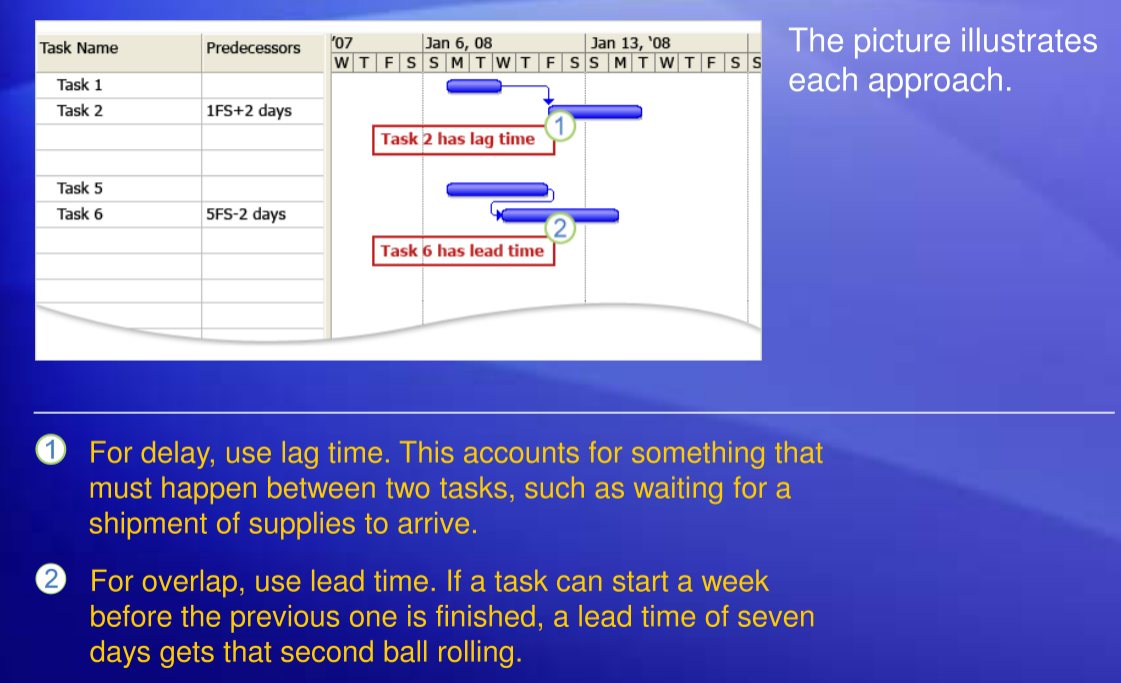
- lead time(提前期)lag time(滞后期)
- What is the other name for critical path analysis? The longest path analysis
Type of Cost
Tangible Intangible
- Tangible costs are the obvious ones that you pay for, like office equipment and employee salaries and training.
- Tangible Benefit: - It is a benefit to a person or organization which can be felt and touched. It is a real benefit which is straight forward.
Ex: Saving money Intangible Benefit: - It is an indirect benefit which can't be felt or touched. Ex: Saving time
- Intangible costs include the time it takes for your staff to learn a new computer system, and to adjust their work routines to the new technology.
Direct Indirect
- Direct cost: Material procured for the project
- Indirect cost: Electricity bill
Sunk cost Future cost
沉没成本,是指以往发生的,但与当前决策无关的费用。从决策的角度看,以往发生的费用只是造成当前状态的某个因素,当前决策所要考虑的是未来可能发生的费用及所带来的收益,而不考虑已往发生的费用。
们在决定是否去做一件事情的时候,不仅是看这件事对自己有没有好处,而且也看过去是不是已经在这件事情上有过投入。我们把这些已经发生不可收回的支出,如时间、金钱、精力等称为“沉没成本”(Sunk Cost)。在经济学和商业决策制定过程中会用到“沉没成本”的概念,代指已经付出且不可收回的成本。沉没成本常用来和可变成本作比较,可变成本可以被改变,而沉没成本则不能被改变。
A sunk cost is a cost that has already been incurred and cannot be recovered.
A sunk cost differs from future costs that a business may face, such as decisions about inventory purchase costs or product pricing. Sunk costs (past costs) are excluded from future business decisions because the cost will be the same regardless of the outcome of a decision.
六西格玛(Six Sigma)
https://wiki.mbalib.com/wiki/六西格玛
6σ管理法的概念
6σ管理法是一种统计评估法,核心是追求零缺陷生产,防范产品责任风险,降低成本,提高生产率和市场占有率,提高顾客满意度和忠诚度。6σ管理既着眼于产品、服务质量,又关注过程的改进。“σ”是希腊文的一个字母,在统计学上用来表示标准偏差值,用以描述总体中的个体离均值的偏离程度,测量出的σ表征着诸如单位缺陷、百万缺陷或错误的概率牲,σ值越大,缺陷或错误就越少。6σ是一个目标,这个质量水平意味的是所有的过程和结果中,99.99966% 是无缺陷的,也就是说,做100万件事情,其中只有3.4件是有缺陷的,这几乎趋近到人类能够达到的最为完美的境界。6σ管理关注过程,特别是企业为市场和顾客提供价值的核心过程。因为过程能力用σ来度量后,σ越大,过程的波动越小,过程以最低的成本损失、最短的时间周期、满足顾客要求的能力就越强。6σ理论认为,大多数企业在3σ4σ间运转,也就是说每百万次操作失误在621066800之间,这些缺陷要求经营者以销售额在15%~30%的资金进行事后的弥补或修正,而如果做到6σ,事后弥补的资金将降低到约为销售额的5%。25种最流行的管理工具客户关系管理全面质量管理顾客细分外包核心能力供应链管理战略规划业务流程再造知识管理使命书和企业愿景书平衡记分卡作业基础管理忠诚度管理六西格玛战略联盟基准管理变革管理计划增长战略经济附加值增值分析价格优化模型开放市场创新规模定制情景设定和突发计划海外经营射频识别
六西格码是帮助企业集中于开发和提供近乎完美产品和服务的一个高度规范化的过程。测量一个指定的过程偏离完美有多远。
六西格码的中心思想是,如果你能“测量”一个过程有多少个缺陷,你便能有系统地分析出,怎样消除它们和尽可能地接近“零缺陷”。
在六西格玛里,“流程”是一个很重要的概念。举一个例子来说明。一个人去银行开账户。从他进银行开始,到结束办理开户叫一个“流程”。而在这个流程里面还套着一个“流程”,即银行职员会协助你填写开户账单,然后她把这个单据拿给主管去审核,这是银行的一个标准的程序。去银行开户的人是一线员工的“顾客”,这是当然的顾客,叫“外在的顾客”,而同时一线员工要把资料给主管审核,所以主管也是一定意义上的“顾客”,这叫“内在的顾客”。工厂与这个案例也很像,即下一道工序是这一道工序的“顾客”。 另一个重要的概念是“规格”。客户去银行办账户,时间是很宝贵的。办账号需要多长时间就是客户的“规格”。客户要求在15分钟内办完,15分钟就是这个客户的规格。而如果银行一线职员要用十七八分钟才能做完,那么,这就叫做“缺陷”。假如职员要在一张单上五个地方打字,有一个地方打错了,这就叫做一个“缺陷”,而整张纸叫一个单元。
“机会”,指的就是缺陷的机会,如果一张单据上有五个地方要打,那么这个单元的缺陷机会为五。
DMAIC的改进方法
六西格玛有一套全面而系统地发现、分析、解决问题的方法和步骤,这就是DMAIC改进方法.
- D(Define)项目定义阶段
- M(Measure)数据衡量阶段
- A(Analysis)数据分析阶段
- I(Improve)项目改善阶段
- C(Control)项目控制阶段
Flowcharts 流程图
Aflowchartis a type ofdiagramthat represents aworkfloworprocess.
Logic and flow of process
帕累托图(Pareto chart)
https://en.wikipedia.org/wiki/Pareto_chart
将出现的质量问题和质量改进项目按照重要程度依次排列而采用的一种图表。
又叫排列图、主次图,是按照发生频率大小顺序绘制的直方图,表示有多少结果是由已确认类型或范畴的原因所造成。
APareto chartis a type of chart that contains bothbarsand aline graph, where individual values are represented in descending order by bars, and the cumulative total is represented by the line.
Ishikawa diagram(Fishbone d. , cause-and-effct d.)
因果分析法
fishbone diagrams,herringbone diagrams,cause-and-effect diagrams, orFishikawa
HUMAN RESOURCES
TABLE A:
Coercive power(强制的)4
Legitimate power2
Expert power1
Reward power5
Referent(所指对象,引用参照) power3
TABLE B:
By Skill
By Authority
By Influence
By Force
By Reward
Vocabulary List
- capability 能力,才能,功能
- maturity 成熟,完备,到期
项目管理期末复习笔记
[TOC]
期中试题
Effective project management focus on four P's.
- People
- Product
- Process
- Project
People management capability maturity model is important.-------------------
High level of maturity in people management yields to effective software engineering.
Meaningful indication of progress is risk, schedule, and cost.????
The umbrella activities of a software process are:
- Software project tracking and control.
- Risk Management.
- Software Quality Assurance.
- Formal Technical Reviews.
- Software Configuration Management
- Work product preparation and production.
- Reusability management, Measurement.
我们知道umbrella有“雨伞;保护物”的意思,但它还有一个解释是“总称;综合团体”(见柯林斯高阶)。我们普遍把umbrella activities翻译成这样一个词“普适性活动”。 普适性:指某一事物(特别是观念、制度和规律等)比较普遍地适用于同类对象或事物的性质。事物普适性源于事物的共性和规律。普适性与针对性相对应。 软件工程过程框架活动由很多普适性活动来补充实现。通常,这些普适性活动贯穿软件项目始终,以帮助软件团队管理和控制项目进度、质量、变更和风险。典型的普适性活动包括:软件项目跟踪和控制、风险管理、软件质量保证等等。
Planned and controlled software projects is to manage complexity
A software project manager should develop a commonsense approach for planning, monitoring, and controlling the project
The software process (and every software project) is populated by stakeholders who can be categorized into one of five constituencies:
- Senior managers who define the business issues that often have a significant influence on the project.
- Project (technical) managers who must plan, motivate, organize, and control the practitioners who do software work.
- Practitionerswho deliver the technical skills that are necessary to engineera product or application.
- Customers who specify the requirements for the software to be engineeredand other stakeholders who have a peripheral interest in theoutcome.
- End users who interact with the software once it is released for productionuse.
A successful project leaders apply a problem solving management style.
Agile teams are self-organizing
The scope of the product must be established and bounded.
Software project scope must be unambiguous and understandable at the management and technical levels.
Problem decomposition called partitioning or problem elaboration
Conduct a postmortem analysis. Establish a consistent mechanism for extracting lessons learned for each project.
lead time(提前期)lag time(滞后期) [附件不可用:b5636f7f6805263b85ebe6afd675272a.png]
What is the other name for critical path analysis? The longest path analysis
Type of Cost
Tangible & Intangible
- Tangible costs are the obvious ones that you pay for, like office equipment and employee salaries and training.
- Tangible Benefit: - It is a benefit to a person or organization which can be felt and touched. It is a real benefit which is *straight forward. *
Ex: Saving money Intangible Benefit: - It is an indirect benefit which can't be felt or touched. > Ex: Saving time
- Intangible costs include the time it takes for your staff to learn a new computer system, and to adjust their work routines to the new technology.
Direct & Indirect
- Direct cost: Material procured for the project
- Indirect cost: Electricity bill
Sunk cost & Future cost
沉没成本,是指以往发生的,但与当前决策无关的费用。从决策的角度看,以往发生的费用只是造成当前状态的某个因素,当前决策所要考虑的是未来可能发生的费用及所带来的收益,而不考虑已往发生的费用。 们在决定是否去做一件事情的时候,不仅是看这件事对自己有没有好处,而且也看过去是不是已经在这件事情上有过投入。我们把这些已经发生不可收回的支出,如时间、金钱、精力等称为“沉没成本”(Sunk Cost)。在经济学和商业决策制定过程中会用到“沉没成本”的概念,代指已经付出且不可收回的成本。沉没成本常用来和可变成本作比较,可变成本可以被改变,而沉没成本则不能被改变。
A sunk cost is a cost that has already been incurred and cannot be recovered. A sunk cost differs from future costs that a business may face, such as decisions about inventory purchase costs or product pricing. Sunk costs (past costs) are excluded from future business decisions because the cost will be the same regardless of the outcome of a decision.
六西格玛(Six Sigma)
https://wiki.mbalib.com/wiki/六西格玛
6σ管理法的概念
6σ管理法是一种统计评估法,核心是追求零缺陷生产,防范产品责任风险,降低成本,提高生产率和市场占有率,提高顾客满意度和忠诚度。6σ管理既着眼于产品、服务质量,又关注过程的改进。“σ”是希腊文的一个字母,在统计学上用来表示标准偏差值,用以描述总体中的个体离均值的偏离程度,测量出的σ表征着诸如单位缺陷、百万缺陷或错误的概率牲,σ值越大,缺陷或错误就越少。6σ是一个目标,这个质量水平意味的是所有的过程和结果中,99.99966% 是无缺陷的,也就是说,做100万件事情,其中只有3.4件是有缺陷的,这几乎趋近到人类能够达到的最为完美的境界。6σ管理关注过程,特别是企业为市场和顾客提供价值的核心过程。因为过程能力用σ来度量后,σ越大,过程的波动越小,过程以最低的成本损失、最短的时间周期、满足顾客要求的能力就越强。6σ理论认为,大多数企业在3σ4σ间运转,也就是说每百万次操作失误在621066800之间,这些缺陷要求经营者以销售额在15%~30%的资金进行事后的弥补或修正,而如果做到6σ,事后弥补的资金将降低到约为销售额的5%。25种最流行的管理工具客户关系管理全面质量管理顾客细分外包核心能力供应链管理战略规划业务流程再造知识管理使命书和企业愿景书平衡记分卡作业基础管理忠诚度管理六西格玛战略联盟基准管理变革管理计划增长战略经济附加值增值分析价格优化模型开放市场创新规模定制情景设定和突发计划海外经营射频识别 六西格码是帮助企业集中于开发和提供近乎完美产品和服务的一个高度规范化的过程。测量一个指定的过程偏离完美有多远。 六西格码的中心思想是,如果你能“测量”一个过程有多少个缺陷,你便能有系统地分析出,怎样消除它们和尽可能地接近“零缺陷”。 在六西格玛里,“流程”是一个很重要的概念。举一个例子来说明。一个人去银行开账户。从他进银行开始,到结束办理开户叫一个“流程”。而在这个流程里面还套着一个“流程”,即银行职员会协助你填写开户账单,然后她把这个单据拿给主管去审核,这是银行的一个标准的程序。去银行开户的人是一线员工的“顾客”,这是当然的顾客,叫“外在的顾客”,而同时一线员工要把资料给主管审核,所以主管也是一定意义上的“顾客”,这叫“内在的顾客”。工厂与这个案例也很像,即下一道工序是这一道工序的“顾客”。 另一个重要的概念是“规格”。客户去银行办账户,时间是很宝贵的。办账号需要多长时间就是客户的“规格”。客户要求在15分钟内办完,15分钟就是这个客户的规格。而如果银行一线职员要用十七八分钟才能做完,那么,这就叫做“缺陷”。假如职员要在一张单上五个地方打字,有一个地方打错了,这就叫做一个“缺陷”,而整张纸叫一个单元。 “机会”,指的就是缺陷的机会,如果一张单据上有五个地方要打,那么这个单元的缺陷机会为五。
DMAIC的改进方法
六西格玛有一套全面而系统地发现、分析、解决问题的方法和步骤,这就是DMAIC改进方法.
- D(Define)项目定义阶段
- M(Measure)数据衡量阶段
- A(Analysis)数据分析阶段
- I(Improve)项目改善阶段
- C(Control)项目控制阶段
Flowcharts 流程图
A flowchart is a type of diagram that represents a workflow or process. Logic and flow of process
帕累托图(Pareto chart)
https://en.wikipedia.org/wiki/Pareto_chart 将出现的质量问题和质量改进项目按照重要程度依次排列而采用的一种图表。 又叫排列图、主次图,是按照发生频率大小顺序绘制的直方图,表示有多少结果是由已确认类型或范畴的原因所造成。
A Pareto chart is a type of chart that contains both bars and a line graph, where individual values are represented in descending order by bars, and the cumulative total is represented by the line.
Ishikawa diagram(Fishbone d. , cause-and-effct d.)
因果分析法 fishbone diagrams, herringbone diagrams, cause-and-effect diagrams, or Fishikawa
HUMAN RESOURCES
TABLE A: Coercive power(强制的) 4 Legitimate power 2 Expert power 1 Reward power 5 Referent(所指对象,引用参照) power 3 TABLE B: By Skill By Authority By Influence By Force By Reward
Vocabulary List
- capability 能力,才能,功能
- maturity 成熟,完备,到期